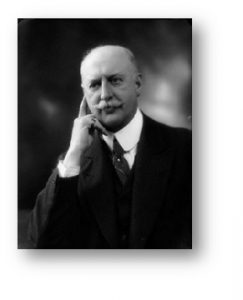
William Frederick Coates
© Richard Graham
William Frederick Coates was born at his parents’ home, Clonallon, Strandtown, on 1 March 1866.
The first member of the Coates family to settle in Ireland from Scotland was Israel Coates (d 1764) who settled in the Falls area of Co Antrim in the early 18th century.
Israel’s son Victor (1760-1822) soon established himself in business at the Lagan Village, an industrial enclave on the Co Down side of the river close to the Ballymacarrett glassworks, trading as a potter making “red ware and a course kind of delph” from 1791 onwards.
Victor soon diversified into starch manufacture and by 1798, in partnership with John Young, a muslin manufacturer of the town; he established one of Belfast’s first foundries, trading as Victor Coates, Son and Young at the Lagan Foundry. Victor’s eldest son, also Victor, died at the early age of 21 in 1812, but his second son William (1796-1878) proved more than capable in expanding the business and soon the company had a second foundry at Princes Dock, off Corporation Street.
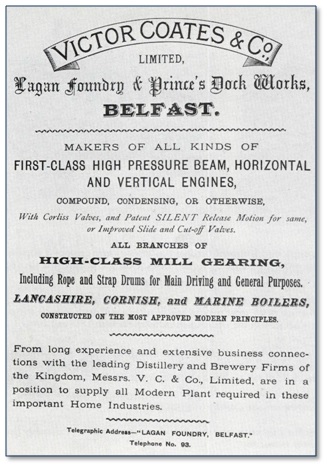
The company, as brass and iron founders, specialised in building steam engines for the rapidly expanding linen industry in Ireland. The engine for the first steamboat in Ireland (a wooden vessel) was built at the Lagan Foundry in 1820, and Coates built the first iron steamship in Ireland in 1838, Coates engines were to be found in numerous mills in Ulster
William Coates served as a member of the Belfast Chamber of Commerce; became a magistrate for Co Down and was elected to serve as Deputy Lieutenant for the town of Belfast, before becoming High Sheriff in 1869.
He lived at “Glentoran” a large house at Lagan Village, not far from the foundry, and married Mary Ann Lindsay of the linen family who operated as manufacturers at the Mulhouse Works and wholesalers and retailers at Donegall Place. Although it was his father who had started the foundry, it was William who developed not only the business but also the family’s social standing in the town of Belfast.
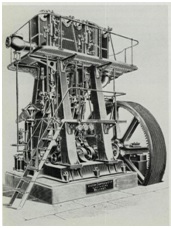
Coates Engine
William had four sons, two of whom, Victor (1826-1910) and David Lindsay (1840-1894), joined him in the business, whilst the eldest Maurice Lindsay, established himself as a cotton spinner on the Springfield Road. Cotton spinning however was to die out in Belfast, after the advent of the American Civil War which prevented raw cotton being exported from America and hence the industrialists of Belfast turned to the spinning of flax instead which could be grown in Ireland or imported from Belgium.
Both brothers, trading as Victor & David Coates Ltd were not only extremely successful businessmen but amassed incredible wealth as the demand for their products grew. Victor purchased 170 acres at Dunmurry where he built Rathmore House as his residence in 1865.
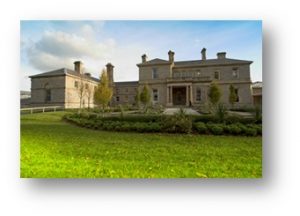
Rathmore House
David chose Strandtown in East Belfast to reside where he bought a large villa named “Clonallon”.
Victor also married into the linen aristocracy, taking for his wife Margaret Airth Richardson, eldest daughter of Jonathan Richardson of Lambeg House and head of the enormously successful Richardson family business. He served as a magistrate and Deputy Lieutenant for the Borough of Belfast.
David in addition to being a partner in the Lagan and Prince’s Dock foundries, was a director and stockholder of The Belfast and County Down Railway (incorporated 1846) which had its terminus at Queens Quay.
The success of their business interests facilitated both brothers to educate their family at the finest educational establishments and William Frederick, David’s Eldest son, was no exception. He was sent to RBAI in Belfast and then St Marks School, Windsor. On his return to Belfast, he entered the established linen firm of Richardson Brothers, which had a warehouse at Donegall Place (now M&S). By 1892 however, David Coates had assisted in setting his son up as a partner in the stock broking firm of R C Grubb & Coates at 1 Lombard Street. The Grubb family, like the Richardsons with whom they were closely associated were Quakers and lived at Killeaton House in Lisburn.
David Lindsay Coates died in 1895, and it was at this stage that with the money he was left that William branched out on his own as W F Coates & Co at 3 Lombard Street. William was later joined by his younger brother (by eight years), Harold, who inherited Clonallon. The concept of limited liability had become popular in the 1880s and W F Coates would have acted as the registered office for many of Belfast’s burgeoning companies. The insurance market was also extensive, demand having grown enormously with the development of the port and the requirement for marine insurance for vessels and their cargoes.
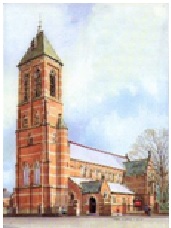
St Mark’s Dundela
As a member of the Episcopalian Church, William worshipped at St Marks, Dundela, where he served as Churchwarden in 1902, as did several members of the Ewart, Valentine and Heyn families, leading merchants and ship-owners of Belfast. His brother Harold fulfilled the role of Hon. Secretary of the Vestry.
In 1907, William married Elsie Millicent Gregory, the daughter of Colonel Fred Gregory of Cromwell Road in Hove, Sussex, and soon afterwards began looking for a residence which would be in keeping with his position in Ulster Society. He found this on the shores of County Antrim at Carrickfergus, where he leased the extensive estate of Glynn Park, which had been built in 1800 by James Craig (1771-1833), Burgess and Member of Parliament for Carrick at the end of the 18th century.
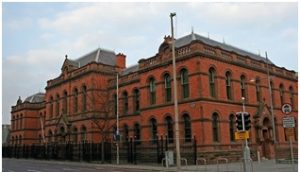
Oold Town Hall building
As early as 1902, William had become a member of Belfast Corporation, becoming a councillor for the Ormeau Ward. The Council was still meeting in the old Town Hall building as City Hall was still being constructed on the site of the White Linen Hall.
In 1906, he served as High Sheriff for Belfast, a chiefly ceremonial role but none the less one with great prestige.
 William and Elsie’s first son Frederick Gregory Lindsay Coates was born on 19 May, 1916 at Glynn Park. A second child, a daughter named Jean Ann Dorothy Coates, was born 3 years later – she later emigrated to Virginia following her marriage to Roland Sinclair, son of Sir Kenneth Sinclair of Windsor Park, and her descendants still live in the United States today.
At Lombard Street, W F Coates entered into partnership with Ainsworth Barr of the old stock broking firm of Osborne & Barr. This to a certain extent allowed him to actively pursue his political career and devote more time to his civic duties, even though he remained as senior partner at the firm which retained his name. His financial acumen allowed Coates to excel in the Finance Department of Belfast Corporation so much so that he became Chairman in 1917. The whole structure of the city’s finances required re-structuring after the First World War.
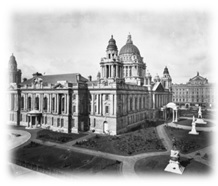
Belfast City Hall
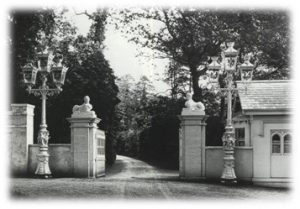
William Coates was elected to serve as Lord Mayor of the City for 3 consecutive terms from 1920-1923. It was customary at that time for a set of ceremonial lamps to be placed outside the entrance to the private residence of the Lord Mayor, and the picture above shows them positioned at the gate lodge to Glynn Park at that period.
1920s Belfast was a particularly troubled city. There was much sectarian strife and a new PR system permitted both Labour and Sinn Fein councillors to be elected to the City Council. Both parties protested at Coates appointment, so he had his hands full in the council chamber when the old order was challenged.
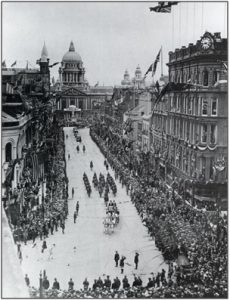
Official opening of the Northern Ireland Parliament
On 22 June 1921, Coates, during his tenure as Lord Mayor of Belfast, was called upon to act as host to King George V and Queen Mary when they made a state visit to the City Hall upon the official opening of the Northern Ireland Parliament. The new Parliament remained at City Hall for only a short time before moving to the Presbyterian Church’s Assembly’s College (below) where it remained until 1932, when the Stormont estate had been purchased and Parliament Buildings as we know them today had been constructed.
Both William Coates children officiated at the ceremony: Miss Jean Coates and Master Frederick Coates, along with Miss Aileen Craig (daughter of James Craig) presented a bouquet to the Queen
Only a month after the visit of the King and Queen, his services to the city were recognised when he was created 1st Baronet Coates, of Haypark, in the City of Belfast [U.K.] on 15 July 1921. Haypark was an area close to the Lagan Village at Ormeau, where his great-grandfather had established the first Coates Foundry and where Glentoran House stood.
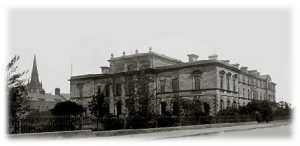
Assembly’s College – location of the first parliament
As a sitting Lord Mayor, Sir W F Coates was also entitled to take his seat in the Northern Ireland Senate (the upper house) in an ex-offficio capacity from 1923 to 1926. The House of Senate was originally intended to be a cross border body, but due to disagreement it became part of the new Northern Ireland Administration. Because the composition of the Upper House was the same as that of the House of Commons, (i.e. Unionist) it was, and remained until its abolition in 1973, an ineffective body. It did however serve as a body which fostered the interests of those elected to its ranks
William F Coates held the position of First Senator in 1921, having served his first term as Lord Mayor in that year. He also performed the duty of Deputy Speaker 1921-1922. He sat in the house as an elected representative between 1924 and 1929 and again as an ex-officio from 1929 to 1931.
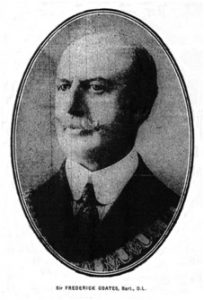
Sir William Frederick Coates
W F Coates’ business continued to flourish at Lombard Street. Belfast had a thriving Stock Exchange that had been established by James Craig (1871-1940), the son of a Whiskey Millionaire (Dunvilles), but who later became bored with stock broking and entered the military, serving in the Boer War, and later becoming Lord Craigavon, Northern Ireland’s first Prime Minister.
Along with many of his contemporaries, Coates was a member of several clubs both in Belfast and London. Membership of such institutions was almost obligatory and nurtured each member’s interests in the business and social life of Belfast. He was a member of the Ulster Club at Castle Place; the Union Club in Donegall Place as well as the Royal Automobile Club in London.
His interest in the RAC came about from the fact that he was one of the first private owners of a motor car in Northern Ireland, which he drove from Glynn Park to Lombard Street each day.
Perhaps a sign of the troubled times during which Coates was Lord Mayor in Belfast can be gauged by an incident which occurred in October 1922. A police guard at Glynn Park challenged two men found acting suspiciously at the entrance to the house during darkness and when they ran off, a bomb was found attached to the pillars of the entrance canopy with a 16” fuse attached. Several spent matches lay on the ground. The attack by republican extremists had been foiled by only a few minutes, and the Coates family were lucky not to be killed or injured. As a result, William Coates moved from Glynn Park to a house with more secure grounds named Thornfield, now the site of Carrickfergus Grammar School.
In 1928, at the age of 62, Coates was once again elected to serve as Lord Mayor of Belfast, which he did for two terms, after which his Unionist contemporary, Sir Crawford McCullagh, returned to hold the position for a further 9 terms. The following year he was called upon to serve as High Sheriff for County Antrim – a position he held until his death.
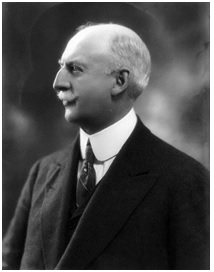
William Frederick Coates died at Thornfield, Carrickfergus, on 19 January 1932 at the age of 65 years. He had only recently been on holiday and before leaving he had called at “Lismara” the home of Sir Crawford McCullagh, where he was described as being the “picture of health”. On his return he had wanted to give his immediate retirement notice to McCullagh who succeeded him as Lord Mayor.
In December of 1931, prayers for his recovery were offered at his then place of worship, St Nicholas Church in Carrickfergus, but he did not recover from his illness
His son Frederick, aged 16, heir to the baronetcy, and his daughter Jane aged 12, were home from England where they were attending boarding school, when he died.
W F Coates had served on Belfast Corporation for 30 years, firstly as a councillor for the Ormeau Ward, then as an Alderman for the Windsor Ward. He had been Lord Mayor on five occasions, and there was outcry when he attempted to retire after his fourth term of office. He was most noted for his work with the finance committee which he carried out from 1917 to his death. He was responsible for the entire finances of the Corporation and was honoured for his work in 1921
Throughout his civic life, he and Lady Coates presided over some of the most prestigious events ever held at City Hall. The visit of George V and Queen Mary for the state opening of Parliament in 1921; the Freedom of the City conferred upon the Marchioness of Dufferin and Ava and the Marquis of Londonderry in 1923, at which Princess Helena Victoria attended, to name but two.
His funeral took place on Saturday 23 January 1932, when Belfast City Centre came to a standstill.
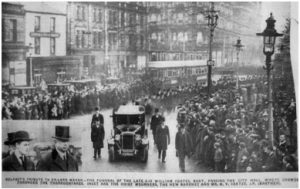
William Frederick Coates Funeral Belfast
He was succeeded by his son, Sir Frederick Gregory Lindsay Coates, 2nd Baronet. Educated at Eaton and Sandhurst, he fought in the Second World War in North Africa and North West Europe, where he was twice wounded. He gained the rank of Brigadier in the service of the Royal Tank Regiment.
His son, Sir David Frederick Charlton Coates (born 1948) is the current holder of 3rd Baronet inherited on 24 June 1994, upon the death of his father.
Elsie, Lady Coates, continued to live at Thornfield, but moved to “The Hut” Newcastle, Co Down, shortly before her sudden death on 26 June 1958. She had been intending to fly out of Nutts Corner Airport to visit her son and daughter who were in America at the time, when she collapsed and died in the terminal building. She had the Freedom of the City conferred upon her in 1935.
The present holder of the title (3rd Baronet) now lives in Dorset, whilst Sir William Coates daughter’s family, the Sinclairs, live in the State of Virginia, USA
W F Coates & Co was incorporated with the stock broking firm of Josias Cunningham & Co in 1991 and continues to trade today at Donegall Street under the name Cunningham, Coates Stockbrokers.
© Richard Graham
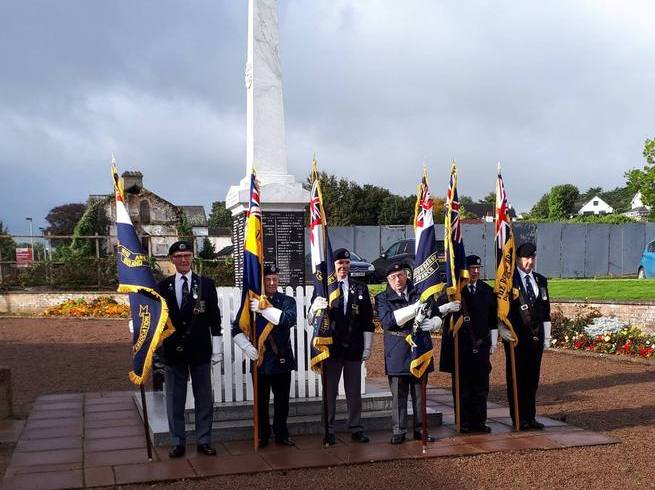
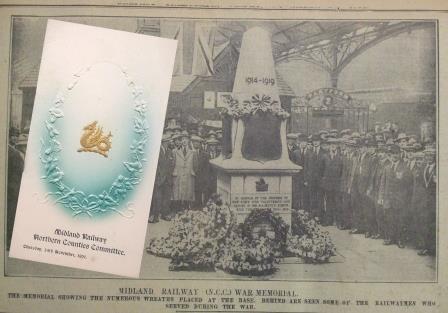

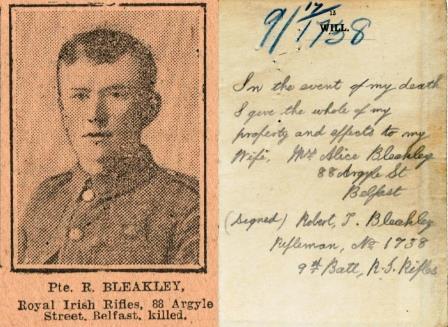
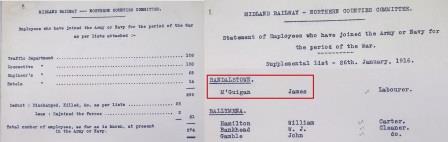 James McGuigan had initially joined a reserve battalion of the Connaught Rangers but was deployed to the 8th Battalion Royal Inniskilling Fusiliers in France. As with Benjamin Anderson, James McGuigan died during the 1916 Battles of the Somme, being killed in action with the 16th Irish Division on 9th September 1916 during the Battle of Ginchy. James Joseph McGuigan was born at Albert Street in Belfast on 4th June 1879 to Patrick McGuigan and Catherine Ahern and he married Mary Drain at the Roman Catholic Chapel in Randalstown on 29 December 1906. James and Sarah were living at Drumsough in Sharvogues in 1911 and they had seven children, the first child (Peter) being born in May 1907 and the last child (Lizzie) being born in March 1915.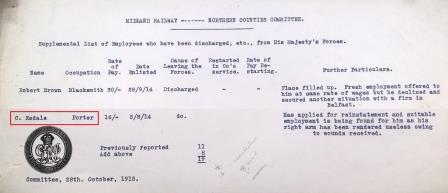

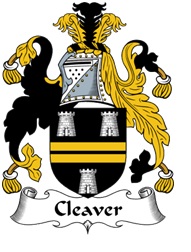
 A Family History
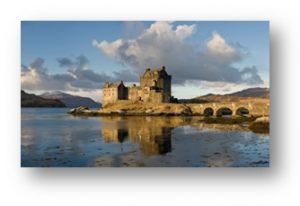 The Cleaver family originated in Scotland where one of the earliest recorded marriages took place between William Cleaver and Elizabeth Dunstone on 2nd February 1770. William served in the army, and the couple’s children were born and raised in the parish of Kilmallie, near Fort William in the Scottish Highlands. Upon his death in 1787, the family moved to Bishopstone, a small village close to the south coast of England in East Sussex.
 John Cleaver was born in Bishopstone on 23rd September 1841, the great grandson of William Cleaver of Fort William. He served his apprenticeship in retail in London, and in a bid to further his career, he crossed the Irish Sea in 1865 to manage one of the departments in the established firm of James Lindsay & Co; general drapers, silk mercers and linen merchants at the Ulster Arcade on Donegall Place. The Lindsay family had themselves made their way to Ireland from Scotland in 1678, where they played an active role in the Relief of Derry in 1689, before moving to Belfast to establish a “woollen, linen and haberdashery warehouse” at 15 Bridge Street, the then centre of commerce in the town, in 1822.
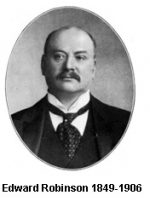 It was during his time at Lindsay Brothers, that John Cleaver met Edward Robinson, a young man from Ballymena, who had earlier secured for himself an apprenticeship with the same company. His father Alexander, was a woollen draper in the County Antrim town. Both men soon realised the enormous potential for the development of the sale of Irish linen products, and with financial assistance from their families, set up a business partnership in premises on Castle Place in 1870, styled as Robinson & Cleaver.
 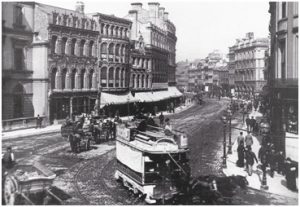 The success of their business was based on the fact that until that time, it had been almost impossible to obtain locally produced goods at reasonable prices. They were quick to identify this gap in the market and within a short space of time, the business had expanded and the partnership moved to larger premises on High Street (left) in 1879. The potential for growth of such a business in Belfast at that time was phenomenal.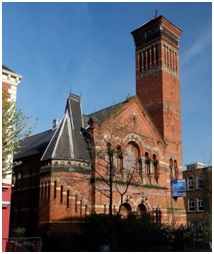
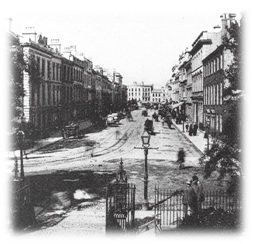 In addition to raising a large family, the business at High Street continued to expand. Belfast was fast becoming one of the leading manufacturing cities of the British Empire, with markets for products produced in North East Ireland opening up across the civilised world. The partners were not slow to capitalise on this phenomenal growth and soon they were supplying high quality items of Irish linen to households across the United Kingdom. Soon the company outgrew their premises on High Street and by the mid-1880s the partners began to look for larger premises. They purchased one of the last residential houses on Donegall Place (see right) which had a large garden onto Donegall Square North, and quickly commissioned one of the leading architects of the day, Young & McKenzie, to design a building that would be fitting for the business they had grown over the past 15 years. The vast majority of parcels despatched from Belfast came from the house of Robinson & Cleaver and the company pioneered overseas sales via their brochures to homes and businesses across the empire.
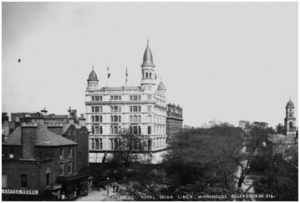 The ‘Royal Irish Linen Warehouse’ of Robinson & Cleaver opened for business on September 1888, the same year that Belfast received its charter as a city. With success came great wealth for the founding partners and by this time, they would have been the equivalent of millionaires in today’s money. This precipitated a move to a larger house on the Malone Road for the Cleaver family – a large Victorian terrace opposite Fisherwick Presbyterian Church.
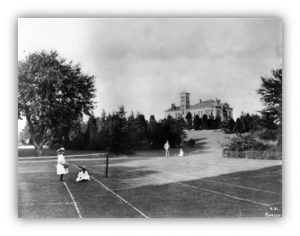 In 1892, such was the success of Robinson & Cleaver, that John Cleaver moved residence again, this time to the estate of ‘Dunraven’ on the Malone Road. Dunraven, a large Italianate Villa, had been built for the timber magnate and shipowner, James Porter Corry in 1870. It extended over several acres with its own lake and extensive parkland. It was in this house that John and Mary would spend the rest of their lives.
 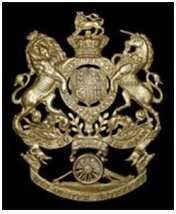 By 1900, his eldest son, (aged 29) Arthur Spencer Cleaver, in addition to becoming a director of Robinson & Cleaver, had embarked on a military career and became a second Lieutenant in the Southern Division of the Mid Ulster (Royal Field) Artillery (left) – a regiment within the British Army. He removed to London, primarily to look after the Regent Street store at the same time becoming an Honorary Lieutenant Colonel with the Royal Garrison Artillery, 1st Reserve Battery.
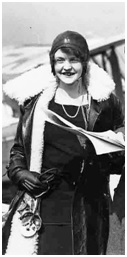
 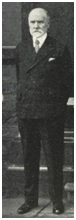 It was however his wife, Adelaide, who achieved notoriety as an adventurer and women pioneer in aviation in the 1920s and 30s. She was an avid mountain climber, expert driver and skilled motor mechanic. Adelaide Franklin Pollock was born in Newtownards in 1896, the eldest daughter of the Rt Hon Hugh MacDowell Pollock, first Minister of Finance in the Government of Northern Ireland created in 1921. Having developed an important flour importing business, Pollock was independently wealthy, and as Chairman of the Belfast Harbour Commissioners had one of the docks named in his honour. Coming from such a privileged position within Ulster Society this was the type of union John Cleaver would have nurtured and encouraged for his offspring.
 See thread on Rootschat here:
 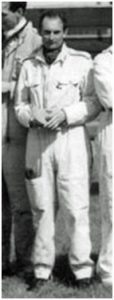 Gordon Neil Spencer ‘Mouse’ Cleaver was born in Stanmore, Middlesex, in 1910, and educated at Harrow. As an accomplished skier, he was the inaugural winner of the ‘Hahnenkammrennen Combined’ in Austria in 1931. The ‘Cleaver Cup’ was subsequently named after his success on the slopes. He joined 601 Fighter Squadron (The Millionaire’s Squadron) Auxiliary Air Force in 1937, being promoted to the position of Flying Officer in October 1938. Upon the outbreak of the Second World War he was mobilised in November 1939, travelling to France with his Squadron to Merville in Northern France. He claimed 7 confirmed “kills” during the Battle of Britain before his hurricane was shot down during combat over Winchester. Although he baled out, the fragments from the Perspex canopy on his plane, shattered into his eyes and face blinding him in the right eye. For his valour, he was awarded the Distinguished Flying Cross (DFC). Despite his injuries he remained in the RAF throughout the war, being released on medical grounds in November 1943, retaining the rank of Squadron Leader. Following on from the injuries he received, Cleaver underwent 18 operations on his eyes under the accomplished eye surgeon Harold Ridley. It was during work carried out during these procedures that Ridley developed the intraocular lens, a major development in repairing damage to the human eye.
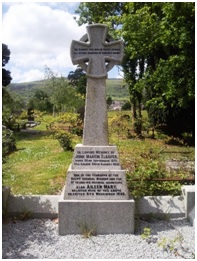 His second son, (John) Martin Cleaver, born in 1871, was educated in England and Germany, gaining a BA from the Royal University of Ireland (precursor to QUB) and graduating from TCD with a law degree in 1893. He set up his own practice as a solicitor later that year at premises on Wellington Place. In 1897, he took into partnership William Fulton, whose father John Fulton, was a linen manufacturer at the firm of John Fulton & Co on Ormeau Avenue. The partnership was style as Cleaver & Fulton. Both the Cleavers and Fultons were Methodists, with John Fulton being greatly interested in Foreign Missions, in addition to being solicitor to the Board of Governors at Methodist College. Soon after the partnership was established, Martin Cleaver, influenced by Fulton’s vision, retired from the law, devoting his whole time to the Egypt General Mission of which he was one of the founders. He arrived in Alexandria, Egypt on 31st January 1898, one of a group of 7 missionaries where he met Aileen Mary White, who had also carried out missionary work in Egypt. After their marriage, they both returned to Alexandria, but after four years of travelling in North Africa, his health broke down, and he took up residence in London as Secretary to the Mission.He later went on to co-found the ‘Fellowship of Faith for the Muslims’ (1915) an international fellowship of Christians who have a concern for the Muslim world, publishing such pamphlets as “Why do the Muslims need the Gospel?”Having been at Keswick in 1915, he returned to visit his father at Dunraven in Belfast, but became ill and died during that visit in August of that year. Both J Martin Cleaver and his wife Aileen are buried at Belfast City Cemetery. The company he established in 1893, Cleaver Fulton Rankin, remains one of Northern Ireland’s leading law firms.
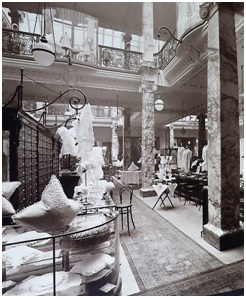 John Cleaver’s third son, (James) Frederick was born at Ashley Villa on 8th June 1875, and after being educated in Belfast and Germany, he travelled the world, visiting Australia and New Zealand, before following his father into the family business at Robinson & Cleaver, in 1895. The firm had developed branches throughout the UK including Regent Street, London; and Church Street, Liverpool. The importance of the company to the economy of Belfast cannot be underestimated. Robinson & Cleaver sent more parcels containing linen products of Irish manufacture out of the city of Belfast than any other business. Their store on London’s Regent Street was one of the most opulent and exclusive in the capital (right). He soon became Managing Director of the firm at its headquarters on Donegall Place (1906) and resided at a house called ‘Bishopstone’ on Deramore Park, recalling the origins of his father’s home in Essex. He married, in 1901, Sarah Hammond Fulton, eldest daughter of John Fulton and sister of the partner of his brother’s law firm, Cleaver and Fulton (see J Martin Cleaver).
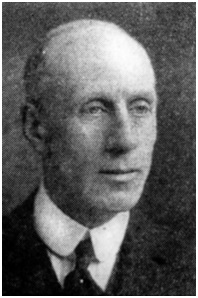 Fred Cleaver was a staunch Unionist and Ulsterman. He was an active member of the Belfast Chamber of Commerce; the Royal Ulster Agricultural Society; the Belfast Harbour Board; The Belfast Chamber of Trade, and was Chairman of the Ulster Tourist Development Association. As a member of the Ulster Unionist Council, he took an active part in the Anti Home Rule campaign and he took a leading part in the organising and equipping of the Ulster Division in the run-up to the Great War of 1914-18. During the war, he led an expedition to retrieve the US crew of the SS Otranto which sank in 1918 whilst in use as an armed merchant cruiser. For his services, he was Knighted in 1927. Upon his father’s death in 1926, Sir Frederick became Chairman of Robinson & Cleaver, but such was the international reputation of the company that several approached were made to acquire the capital from the family controlled concern. The ordinary shares of the company were transferred to Edward de Stein, a merchant banker, in 1935, with Sir Frederick and his brother Arthur being retained in an advisory capacity.
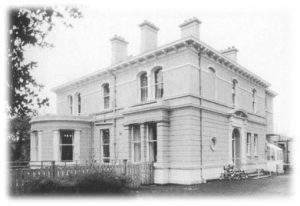 Sir Frederick Cleaver died suddenly on the evening of Saturday 31st March 1936, following his decision to take a walk from his home, Marlborough Park House, to which he had moved in 1927 (left). He had reached Stranmillis Road, when he collapsed and died. He was survived by his wife Lady Sarah Cleaver who died at Broomhill Park in December 1951. Like so many other members of the family, she also took an active interest in the work of the Methodist missions.
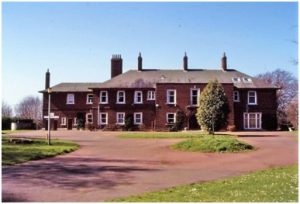 John Cleaver’s eldest surviving daughter, Mabel, was born in March 1877 and in what was not perhaps a surprising move, she married Edward (Ned) Robinson on 12th June 1901 at University Road Methodist Church. Ned Robinson was the eldest son of Edward Robinson, one of the founders of Robinson & Cleaver and was a joint managing director of the firm at Donegall Place. They began their married life at a house on Somerton Park, but following the death of his father in 1906, they moved to a magnificent estate at Shaw’s Bridge overlooking the Lagan named Terrace Hill. It was the sale of the company to Edward De Stein in 1936, that precipitated the couple to demolish the original house of 1856. Ned and Mabel who enjoyed a fantastic social life, built a sprawling new house in an American neo-Georgian style, the design being executed by Young & McKenzie, (who designed the original store on Donegall Place in 1888) and in which they could entertain the cream of Ulster Society. Mabel had two daughters, who were brought up in a very privileged environment. Terrace Hill extended to over 9,200 sq feet, and had beautifully manicured gardens overlooking Barnett’s Demesne to Malone House on the other side of the valley. The house had tennis courts and a swimming pool. The eldest, Gwendoline, married Peter Swann, an insurance broker of the Wirral and left Northern Ireland in 1951, whilst Inez married Thomas Agnew, a land agent in Belfast. They were the last occupants to live at Macedon House at Whiteabbey, before it was taken over by Barnardo’s as a children’s home in 1950, as was Terrace Hill, after the departure of the Clokey family in 1970. Inez died in 1978 without issue
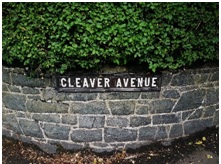 Today there are several reminders of the power and influence of the Cleaver family in Ireland, although there are no remaining family members now resident here. The site of the once magnificent family home and estate at Dunraven, is now covered in villa developments from the 1930s, when the house was sold, and is now known as Cleaver Park and Cleaver Avenue, off the Malone Road.
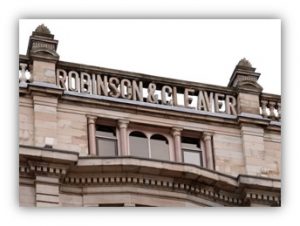 The magnificent department store buildings of Robinson & Cleaver still stand on the Corner of Donegall Place and Donegall Square North, as they do in London, although the family connection with the business was severed in 1936. The achievements of the company in obtaining several Royal Warrants and supplying Royal households across the world was none the less remarkable
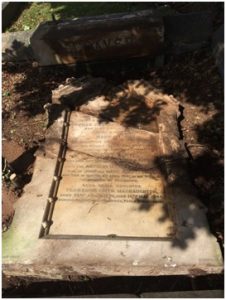 The final resting place of the Irish branch of the family can be found at Belfast City Cemetery, where there are three separate memorials. The saddest of these is the main family memorial which has only recently been revealed having been badly damaged by vandals during the period of civil unrest in Northern Ireland in the 1970s.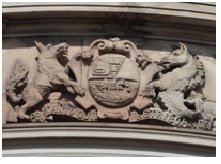
 1922 – March 15th – Stained glass window is erected by Mrs. R.T. Martin to the memory of her husband, Mr. R.T. Martin and her son Lieut. John S. Martin. This window was dedicated by the Rev. J.R. Prenter.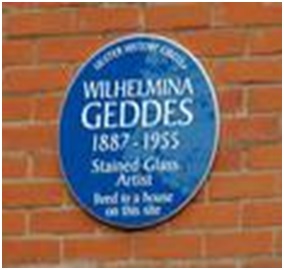
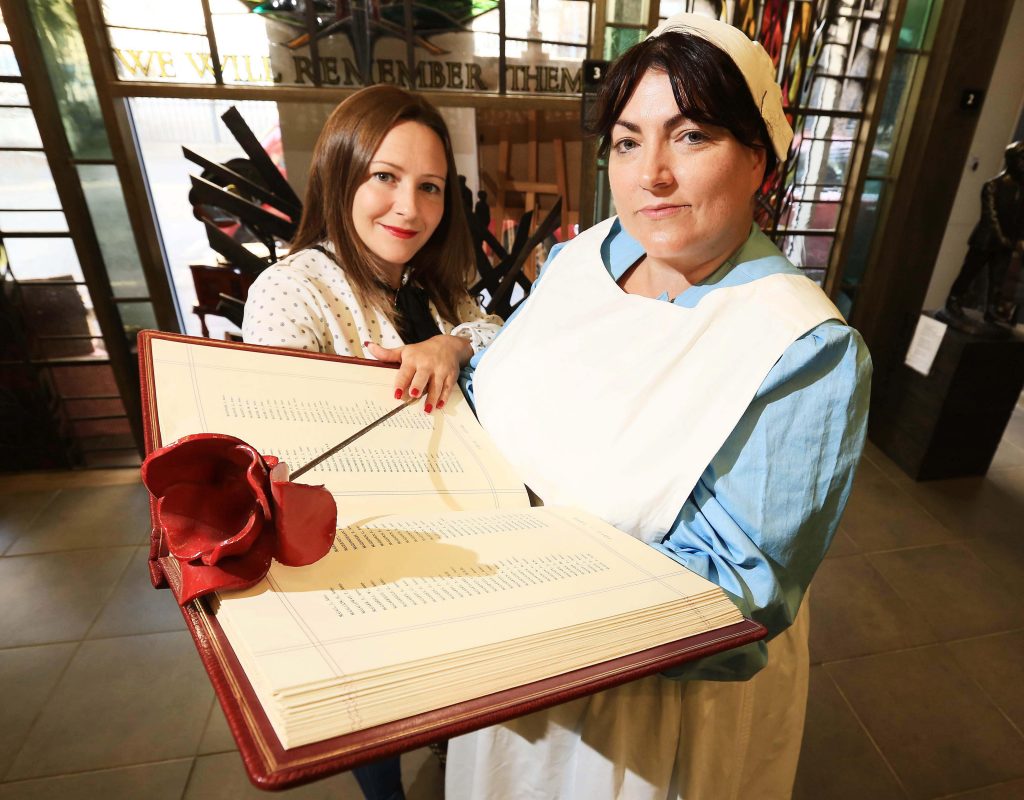
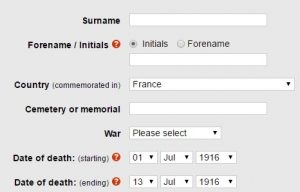 The records returned were downloaded and imported to Excel and columns were added to facilitate the recording of additional information, such as Division, Type of Death, Place of Birth and associated County/Country.